
First of all, let’s celebrate the massive wins happening right now in health and wellness. The rise of GLP-1 medications—like Semaglutide and Tirzepatide—has completely revolutionized how we approach metabolic health and sustainable weight loss. I see clients walking into Elite MedAesthetic every single week who have shed 30, 50, or even 100 pounds. They have more energy, their clinical markers are up, and they feel incredible.
But as an aesthetic provider, I also see the unexpected side effect that often follows a massive health transformation: rapidly deflated, loose, or “crepey” skin. Whether it’s on the face, the neck, or areas of the body, rapid weight loss can leave the skin looking tired and lacking its structural “snap.”
When this happens, the first instinct for many is to run to the department store or Sephora and buy a $200 “firming” or “tightening” cream. I’m here to save you your hard-earned money and give you the unfiltered clinical truth: creams will not fix GLP-1 loose skin. To understand why, we have to look at the anatomy of your skin—and why an advanced treatment like microneedling is the ultimate solution.
The Root Cause: Why GLP-1 Weight Loss Causes Loose Skin
To understand why your skin feels loose, think of your skin like a balloon. When you gain weight, that balloon slowly stretches out to accommodate the volume. When you lose weight gradually over several years, your skin has a bit of time to naturally adapt and contract.
However, GLP-1 medications work incredibly well and incredibly fast. When you drop weight rapidly, the fat underneath the skin melts away, but the “balloon” stays stretched out.
Compounding the problem is a phenomenon sometimes called “Ozempic Face” or “GLP-1 face,” which is actually just rapid volume loss. When you lose fat quickly, you also lose the deep structural scaffolding that keeps your skin taut. Without that underlying volume, the skin sags, wrinkles, and folds.
The Molecular Truth: Why Creams are Only Surface Level
This is where the magic creams promise to fix everything. Let’s look at a quick cross-section of how your skin is actually built:
Your skin has two primary layers that matter here:
- The Epidermis: The thin, waterproof outer layer that you can see and touch.
- The Dermis: The deep, thick structural layer where your collagen, elastin, and blood vessels live.
Loose, saggy skin is exclusively a dermal problem. The structural integrity of your skin relies entirely on collagen (which gives skin its thickness) and elastin (which gives skin its “snap back” elasticity).
When you apply a firming cream, lotion, or serum, the molecules are almost always too large to penetrate past the protective barrier of the epidermis. Creams live and die on the surface. They can hydrate the dead skin cells on top, making your skin look temporarily plumper and smoother for a few hours, but they cannot alter the deep structural architecture of the dermis. Treating dermal laxity with a topical cream is like trying to fix the cracked foundation of a house by putting a fresh coat of paint on the front door. It just doesn’t reach the problem.
Enter Microneedling: The Deep Dermal Awakening
If we want to fix loose skin, we have to cross the border into the dermis and force your body to build brand-new, thick structural foundations. That is exactly what microneedling does.
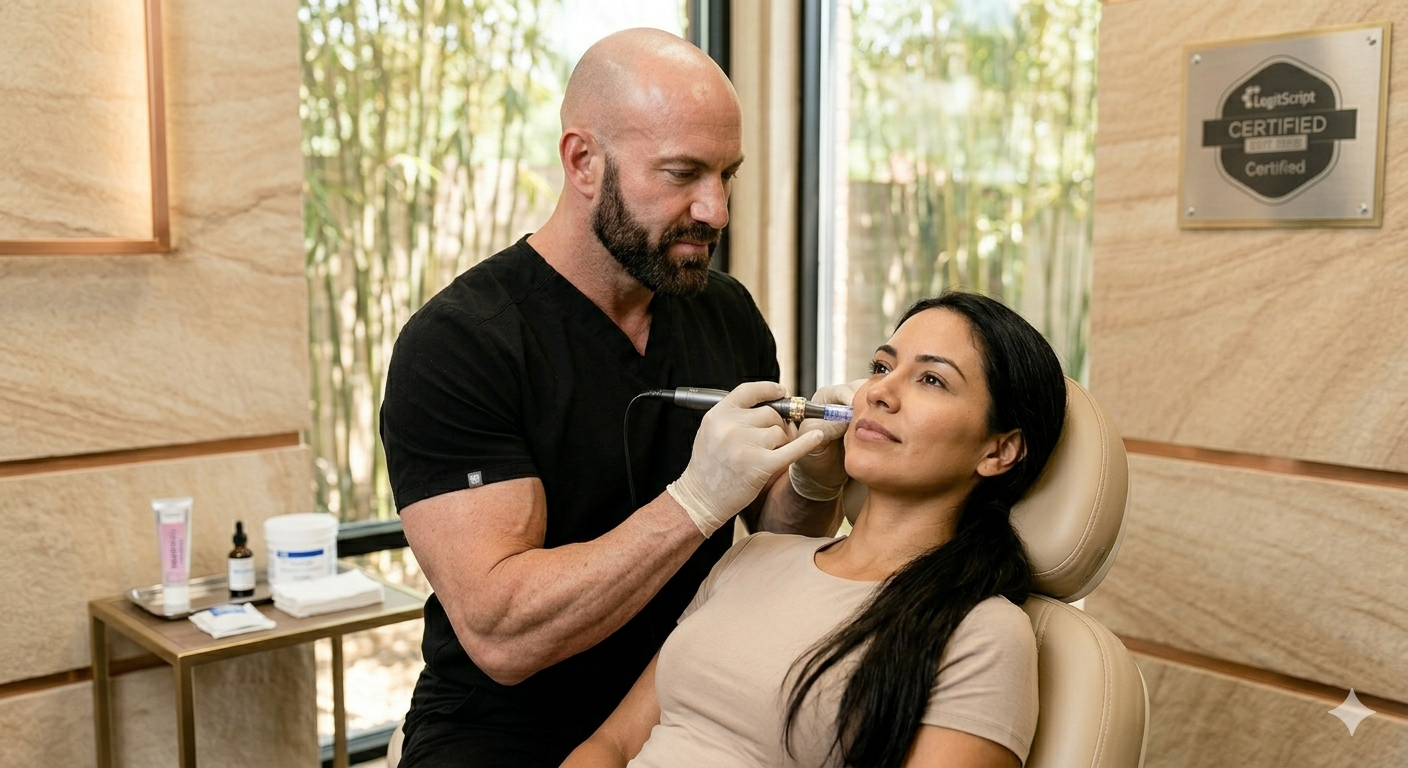
Microneedling (also known as Collagen Induction Therapy) uses a medical-grade device equipped with sterile, microscopic needles. When we guide this device over the skin, it creates thousands of precise, controlled “micro-injuries” that pierce right through the surface epidermis and deep into the dermis.
Don’t let the word “injury” scare you—this is a highly calculated, strategic process. Your body’s internal healing mechanism responds to these micro-channels instantly. It views them as a signal to go into overdrive and repair the area.
How does it repair it? By flooding the dermis with a massive wave of brand-new collagen and elastin. Over the weeks following your session, this fresh collagen remodels the skin from the inside out. It physically thickens the dermal layer, tightening the “slack” in that stretched-out balloon, smoothing out crepey textures, and restoring that firm, youthful bounce that rapid weight loss took away.
Maximizing the Results: What We Do at Elite
Because your skin has gone through a massive transition during your weight loss journey, we don’t just stop at standard microneedling. During the treatment, while those thousands of micro-channels are wide open down into the dermis, we can infuse medical-grade serums, growth factors, or exosomes.
Think of it this way: microneedling creates the perfect, open highway straight to the root of the problem, and we use that highway to deliver the exact cellular building blocks your skin needs to rebuild itself faster and tighter.
The Bottom Line
You did the hard work of transforming your health and changing your body. You shouldn’t have to feel self-conscious about the loose skin left behind.
If you are ready to stop wasting money on surface-level creams and want to start a clinical, inside-out approach to tightening your post-weight-loss skin, let’s build a game plan together.
Come see us at Elite MedAesthetic here in Knoxville. We’ll look at your skin’s unique story, mapping out a custom microneedling regimen that honors your transformation and gives you the firm, radiant confidence you completely deserve.
